Freyja: The Most Misunderstood Goddess in Norse Mythology
Written By Josefine Humble
Freyja is one of the most influential and infamous figures in Norse mythology, yet she remains one of the most misunderstood. She is renowned as a “love goddess,” a Nordic Aphrodite of the myths of romance and beauty; but the real Freyja is far more complex: she is a powerful, political, and formidable woman. In understanding Norse society, and its relationship with femininity, warfare and the supernatural, seeing Freyja in her full, unfiltered form is key.
At the heart of Freyja’s identity is contradiction, but this should not be mistaken for incoherence. She embodies a wide range of dualities that the Viking Age culture recognised as central to womanhood and femininity: fertility and ferocity, sensuality and sovereignty, tenderness and terror. Freyja’s role is to represent a worldview in which female power does not have to be less than or subordinate; it can be destabilising, immense in impact, and even essential to the cosmic order of the world.
Freyja’s first major role is as a practitioner and teacher of seiðr (a powerful form of magic rooted in prophecy, shaping of fate, and emotional manipulation). In the sagas and the Eddas, seiðr is a disruptive form of magic, it is not inherently evil but neither is it benign. It is a dangerous form of magic because it gives the practitioner insight and influence over human destiny, which in Norse mythology was seen as the ultimate power. Freyja is the foremost master of this craft of influencing human destiny. Odin, who is typically portrayed in Norse mythology as the ultimate seeker of magical knowledge, learns seiðr from her. This power dynamic and reversal of typical gender roles, in which a male god learns a sacred skill from a female deity, signals the unique intensity of Freyja’s power, as it subverts the norm. Seiðr itself was often regarded as “unmanly”, as it was associated with witchcraft and seen as taboo, yet Freyja’s use of it is unquestioned and respected. Freyja’s role in the stories represents femininity as both wise and necessary for cosmic stability, emphasising its importance.
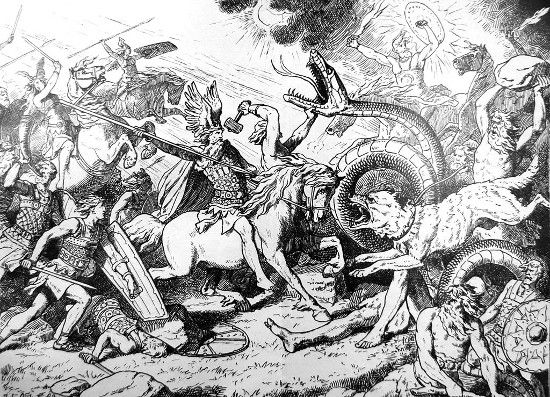
Moreover, Freyja’s position as a goddess of war and death is also often overlooked. While Odin receives half the slain warriors in Valhalla, Freyja receives the other half in Fólkvangr (her own realm). This is one of the clearest indications that Freyja is not simply a gentle deity of love and beauty; rather she is deeply significant to warfare, honour, and the culture of heroism. The warriors who train for the last battle matter as much to her as to Odin, and therefore she is a central architect of Ragnarök itself, the most significant event of Norse mythology.
This duality that she embodies by presiding over both desire and death, makes Freyja a distinctly Norse creation. The Viking worldview regarded passion and violence not as opposites but as intertwined forces that shaped human life. Freyja stands at the very centre of Norse values, these included desire, destiny, honour, and battle.
Her beauty is highlighted all the time by modern portrayals, but it is also more complex than it appears. Freyja is aware of her beauty, and consequently uses attraction as a political tool, negotiating with giants and gods alike. One of the most famous myths involving Freyja is when the giant builder demands her hand in exchange for building the walls of Asgard. The male gods do not lightly offer Freyja as her value exceeds that of their own fortifications. She is irreplaceable and symbolically central to divine order. In myths where Freyja refuses marriage proposals, her refusals become acts of political autonomy, reinforcing that she stands in a position of strength, not vulnerability, even in a world that undervalues women and forces them to submit to the desires of men.

The Goddess Freyja
Freyja’s tears, which are often described as tears of gold, further show her character and portray her feminine strength. Her tears highlight the emotional strength of Norse deities rather than their use connotations of fragility. Her tragic search for her lost husband Óðr adds a layer of humanity to her persona, while also demonstrating her profound loyalty and her capacity for dealing with deep loss; these traits are completely compatible with her ferocious femininity and strong sense of agency. Rather than being weakened and diminished by love and relationships, Freyja is enlarged by it.
Modern audiences often struggle when faced with figures who embody contradictory traits, preferring clear and tidy archetypes. Freyja is the epitome of this: she is not a love goddess, a war goddess, or a fertility goddess. She is all three of these at once.
Through portraying Freyja in her correct form, as a deity who reflects the complexities of Norse society itself, we reclaim her from centuries of oversimplification. Freyja functions as a mirror to show modern society a culture that honoured women as the ultimate weavers of destiny, keepers of knowledge, and arbiters of life and death. The real Freyja is an enduring symbol of femininity in all its power.
Comments